There is seldom any wind with first snows, more often rain, but later, when there is already a smooth foot or two over all the slopes, the drifts begin. The late snows are fine and dry, mere ice granules at the wind's will. Keen mornings after a storm they are blown out in wreaths and banners from the high ridges sifting into the canons.
Once in a year or so we have a "big snow." The cloud tents are widened out to shut in the valley and an outlying range or two and are drawn tight against the sun. Such a storm begins warm, with a dry white mist that fills and fills between the ridges, and the air is thick with formless groaning. Now for days you get no hint of the neighboring ranges until the snows begin to lighten and some shouldering peak lifts through a rent. Mornings after the heavy snows are steely blue, two-edged with cold, divinely fresh and still, and these are times to go up to the pine borders. There you may find floundering in the unstable drifts "tainted wethers" of the wild sheep, faint from age and hunger; easy prey. Even the deer make slow going in the thick fresh snow, and once we found a wolverine going blind and feebly in the white glare.
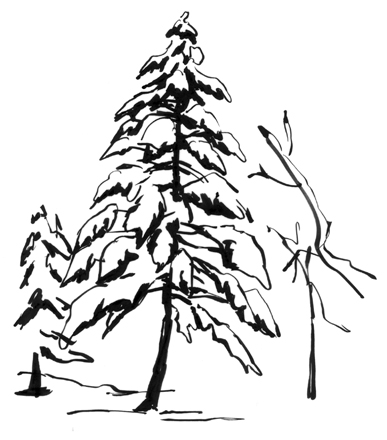
No tree takes the snow stress with such ease as the silver fir. The star-whorled, fan-spread branches droop under the soft wreaths ---- droop and press flatly to the trunk; presently the point of overloading is reached, there is a soft sough and muffled drooping, the boughs recover, and the weighting goes on until the drifts have reached the midmost whorls and covered up the branches.
When the snows are particularly wet and heavy they spread over the young firs in green-ribbed tents wherein harbor winter loving birds.
# Contents