One expects to find lakes down to about nine thousand feet, leading into each other by comparatively open ripple slopes and white cascades. Below the lakes are filled basins that are still spongy swamps, or substantial meadows, as they get down and down.
Here begin the stream tangles. On the east slopes of the middle Sierras the pines, all but an occasional yellow variety, desert the stream borders about the level of the lowest lakes, and the birches and tree-willows begin. The firs hold on almost to the mesa levels,--there are no foothills on this eastern slope,--and whoever has firs misses nothing else. It goes without saying that a tree that can afford to take fifty years to its first fruiting will repay acquaintance. It keeps, too, all that half century, a virginal grace of outline, but having once flowered, begins quietly to put away the things of its youth. Years by year the lower rounds of boughs are shed, leaving no scar; year by year the star-branched minarets approach the sky. A fir-tree loves a water border, loves a long wind in a draughty canon, loves to spend itself secretly on the inner finishings of its burnished, shapely cones. Broken open in mid-season the petal-shaped scales show a crimson satin surface, perfect as a rose.
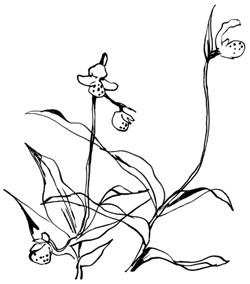
The birch--the brown-bark western birch characteristic of lower stream tangles--is a spoil sport. It grows thickly to choke the stream that feeds it; grudges it the sky and space for angler's rod and fly. The willows do better; painted-cup, cypripedium, and the hollow stalks of span-broad white umbels, find a footing among their stems. But in general the steep plunges, the white swirls, green and tawny pools, the gliding hush of waters between the meadows and the mesas afford little fishing and few flowers.
One looks for these to begin again when once free of the rifted canon walls; the high note of babble and laughter falls off to the steadier mellow tone of a stream that knows its purpose and reflects the sky.